

Previously I had written a blog called “Wrap Java into an executable with Launch4J”. The title for the article I now realise was perhaps misleading in that it only covered how to download the tool and install. I understand that some readers may actually want an example of how to convert their Java code into an actual executable. This aims to address that short coming.
Continue reading “Wrap Java into an executable with Launch4J-Part 2”Java with SQLite embedded database
If your java desktop application needs to store data in a database between sessions then a good solution is to embed a database into your solution. What this gives you is an application which installs the database as part of the application, builds the database tables and populates it with any initial data. This approach avoids the need for the user to install a database separately from the application.
Let’s takes a look at how to you might go about this.

Using JTree to select information
In the previous post we looked at displaying information in a hierarchy using JTree.
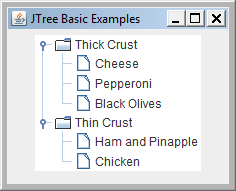
Now all this is fine but, usually when we use a JTree it is because we want to be able to select an item, one or more. For our example let us concern ourselves with selecting a single item and displaying the detail associated with that item. Continue reading “Using JTree to select information”
Create Math formula image
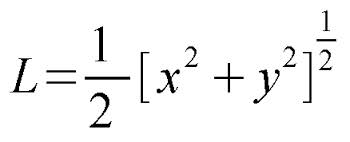
The other day I came across an example where a formula written in a Java program could be represented as a standard equation on the screen. I thought this was brilliant. I recall back in my Uni days using the formula editor in Microsoft Word to present formulas. Now I don’t have a use for this in Java yet but, you never know. However, in case anyone out there does have a requirement to produce a formula from within their Java program then maybe this will help.
The challenge is to produce an output that looks like this:
Traversing the file system
Traversing the file system is one of the common tasks required in applications. Search the web for examples and you can find plenty of examples of how to go about it. One of the most popular is to work through the file system using recursive calls like this: Continue reading “Traversing the file system”